
Most businesses don’t expect a disaster to happen — but they can happen anytime. A storm, cyberattack, or system failure could stop your business for days, or even for good, if you’re not prepared with a solid disaster recovery planning strategy.
Running a business in Honolulu has its advantages, but it also comes with risks like hurricanes, tsunamis, volcanoes, and shipping delays. That’s why disaster recovery planning is so important — it helps keep your business safe and strong, no matter what happens.
What is disaster recovery planning?
Disaster recovery planning is a way to prepare your business to quickly recover important data and IT systems after something goes wrong, like a storm, power outage, or cyberattack. It helps you get back to work faster. While disaster recovery focuses on fixing tech problems, business continuity is about keeping your whole business running during the trouble.
Key Components of a Solid DR Plan
-
Data Backup and Storage
-
Emergency Contacts & Roles
-
Communication Strategy
-
Recovery Time & Recovery Point Objectives
Why is disaster recovery crucial in Honolulu?
Honolulu businesses face a unique set of risks that make disaster recovery planning absolutely essential. Here’s why:
1. High Risk of Natural Disasters
Hurricanes, flash floods, earthquakes, and volcanic activity are not hypothetical threats in Hawaii — they’re part of the reality. One major event can wipe out data, damage infrastructure, and bring operations to a standstill. Without a recovery plan, businesses risk permanent closure.
2. Geographic Isolation
Help isn’t just minutes away. Honolulu’s location means that emergency response, replacement parts, and support services can be delayed for hours or even days. A solid disaster recovery plan ensures business continuity while waiting for external assistance.
3. Supply Chain Vulnerabilities

Nearly everything must be shipped or flown to the island. Any disruption — weather, port closures, or transportation issues — can delay essential goods and equipment. Businesses need contingency plans to operate during supply delays.
4. Increasing Cybersecurity Threats
Honolulu may feel remote, but it’s not immune to cyberattacks. In fact, smaller, isolated businesses are often targeted because they’re perceived as easier to breach. Without a recovery strategy, a single attack could result in massive data loss and financial damage.
5. Limited Local Resources During Emergencies
When multiple businesses are affected by the same disaster, local IT and recovery resources get stretched thin. Planning ahead ensures you’re not scrambling for help when everyone else is doing the same.
Common Mistakes Businesses Make
When it comes to disaster recovery, many businesses assume they’re in the clear — until disaster strikes. Here are some of the most common (and costly) mistakes businesses make when it comes to preparing for the unexpected:
1. Believing “It Won’t Happen to Us”
This is the biggest trap of all. Many businesses, especially smaller ones, think they’re too small to be targeted by hackers or too lucky to be hit by a natural disaster. But in reality, no one is immune. Complacency is the fastest way to get caught off guard.
2. Failing to Create a Formal Disaster Recovery Plan
Some businesses have a vague idea of what they’d do in a crisis — but nothing is documented. If your team doesn’t have a clear, step-by-step plan to follow, chaos will take over when every second counts.
3. Not Testing the Plan Regularly

Having a plan isn’t enough. If you don’t test it, how do you know it works? Many businesses wait until disaster hits to find out their backups failed or their team doesn’t know what to do. Regular testing is key to identifying gaps before it’s too late.
4. Using Outdated or Incomplete Backups
Backing up data once a month? Keeping backups on the same server as your main system? That’s a recipe for disaster. Reliable, automated, and offsite backups are essential for quick recovery.
5. Ignoring Cloud or Offsite Recovery Options
Some businesses still rely solely on local storage, leaving them vulnerable to physical damage from floods, fires, or power surges. Not embracing cloud or hybrid solutions can delay recovery and increase downtime.
6. Overlooking Staff Training
Even the best plan is useless if your team doesn’t know how to execute it. Disaster recovery is a team effort — and your staff should know their roles, responsibilities, and how to respond under pressure.
Avoiding these common mistakes can make all the difference between bouncing back or going out of business after a crisis. Disaster recovery isn’t just an IT issue — it’s a business survival strategy.
Steps to Build a Bulletproof DR Plan
Creating a disaster recovery (DR) plan might sound complicated, but it’s all about being prepared and knowing what to do when things go wrong. Here are the key steps to help you build a strong and reliable DR plan for your business:
1. Identify the Risks
Start by thinking about what could go wrong. Are you at risk for hurricanes, cyberattacks, power outages, or hardware failures? Knowing your biggest threats helps you plan better.
2. Do a Business Impact Analysis
Figure out which parts of your business are most important. What systems or data do you need up and running first? This step helps you set priorities during recovery.
3. Set RTOs and RPOs
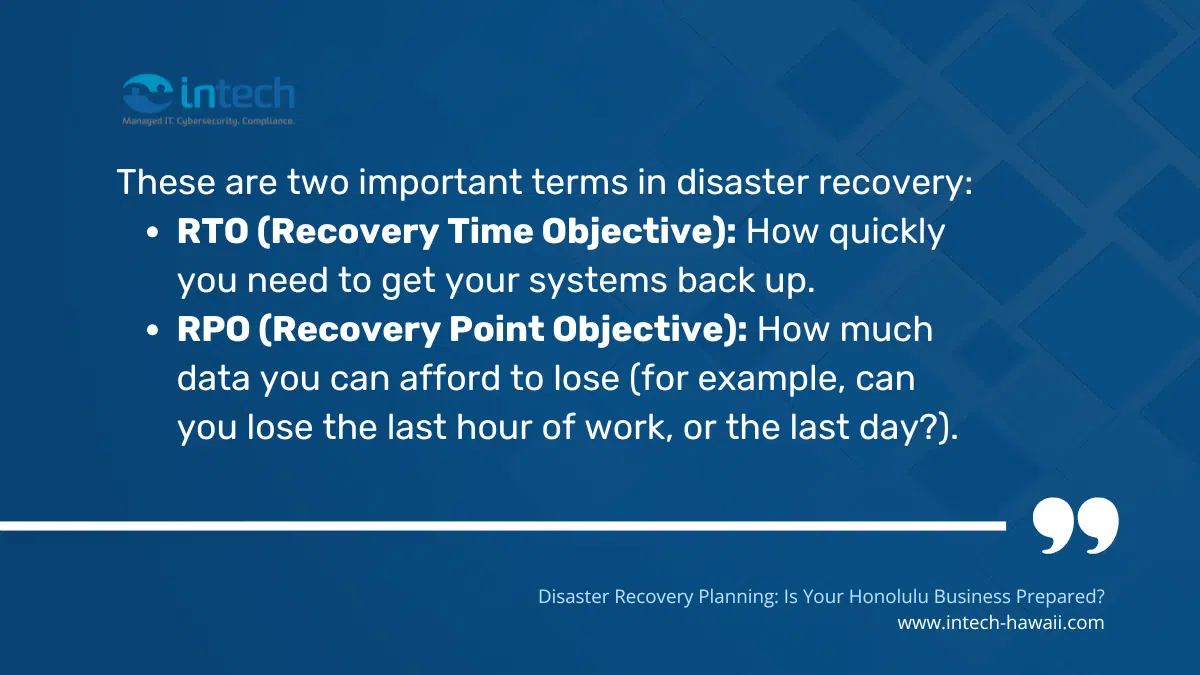
These are two important terms in disaster recovery:
-
RTO (Recovery Time Objective): How quickly you need to get your systems back up.
-
RPO (Recovery Point Objective): How much data you can afford to lose (for example, can you lose the last hour of work, or the last day?).
4. Choose the Right Backup Solution
Use reliable backup tools that automatically save your data regularly. Offsite or cloud backups are especially helpful if something happens to your physical location.
5. Create a Clear DR Plan Document
Write everything down in a simple, step-by-step guide. Include:
-
Who does what in an emergency
-
How to access backups
-
Contact information
-
How to communicate with staff and customers
Make sure the document is easy to find and understand.
6. Train Your Team
Your staff should know what to do in a disaster. Train them on the plan so they’re not guessing during a crisis. Everyone should know their role.
7. Test the Plan Regularly
Don’t just create the plan and forget it. Test it at least once a year to make sure it actually works. Practice helps you find problems before a real emergency happens.
8. Keep the Plan Updated
Technology and businesses change, so review your plan regularly. Update it whenever you change systems, add team members, or grow your business.
Don’t Wait for Disaster to Strike—Be Prepared Now!
Disasters can strike without warning—is your business ready? A strong disaster recovery plan is essential to protect your data, operations, and reputation.
Intech Hawaii offers more than just disaster recovery. With over 30 years of experience, we provide managed IT services, cybersecurity, IT support, and compliance support—all tailored to keep Honolulu businesses secure and resilient.
Contact us and safeguard your business before it’s too late.
