

Cybersecurity is more important than ever today. Businesses face constant threats from hackers and malware, putting valuable data at risk. Managed IT services improve cybersecurity and offer a robust solution to these challenges by providing expert resources and advanced technology to safeguard sensitive information. By partnering with a managed IT service, companies can significantly reduce the risk of cyberattacks and data breaches.
Managed IT services not only provide regular security updates and patches but also monitor systems for any unusual activity. They perform assessments to identify vulnerabilities and implement strategic defenses. This proactive approach helps ensure that security measures are always up-to-date and effective. Organizations can focus on their core business tasks while their security is handled by professionals.
For small and medium-sized businesses, managed IT services are cost-effective and efficient. Many businesses lack the skills and resources to maintain high levels of cybersecurity on their own. By outsourcing these services, they gain access to a team of experts who can conduct initial assessments and continuously guard against potential threats. This partnership allows businesses to thrive without the worry of cyber threats looming overhead.
Enhancing Network Security
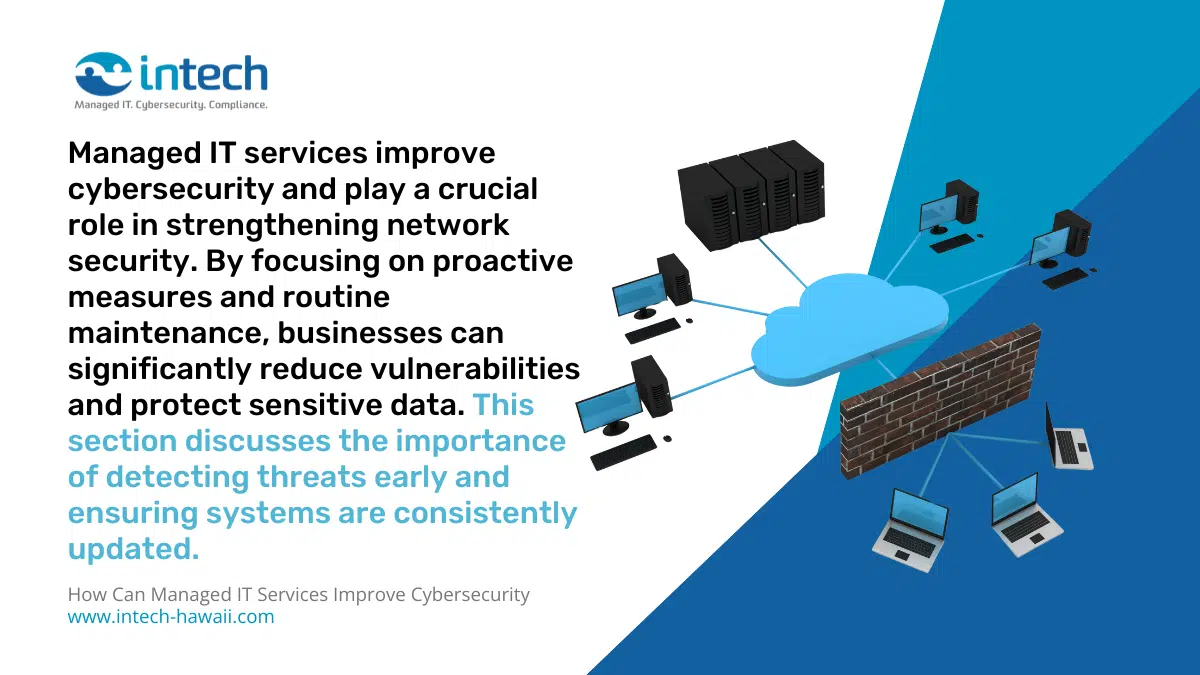
Managed IT services improve cybersecurity and play a crucial role in strengthening network security. By focusing on proactive measures and routine maintenance, businesses can significantly reduce vulnerabilities and protect sensitive data. This section discusses the importance of detecting threats early and ensuring systems are consistently updated.
Proactive Threat Detection
Proactive threat detection is essential for maintaining a secure network. Managed services use advanced tools and technologies to monitor network activity in real-time. This allows for the identification of unusual patterns or unauthorized access attempts, enabling quick response before a security breach occurs.
Employing continuous monitoring and sophisticated analytics, managed service providers can detect threats that might go unnoticed by traditional methods. They also conduct regular security audits, helping to highlight any potential vulnerabilities. Timely interventions and preventive measures can save organizations from costly data breaches and downtime.
Additionally, having a dedicated team that focuses on cybersecurity ensures that all threats are addressed promptly. This means less risk of a cyber attack disrupting business operations. Partnering with a managed service provider thus offers peace of mind and enhances the overall security posture of an organization.
Regular System Updates and Patch Management
Keeping systems updated is a critical aspect of network security. Managed IT services improve cybersecurity, which ensure that all hardware and software components receive timely updates and patches. These updates often contain important security fixes that prevent hackers from exploiting known vulnerabilities.
Managed services systematically manage updates and patches across the entire IT infrastructure. This organized approach reduces the risk of manual errors and maintains the integrity of various systems. Automated processes employed by managed services facilitate smooth deployment of patches without interrupting daily operations.
Regular updates also enhance compatibility and performance, which contributes to better overall protection. By relieving internal teams from these tasks, businesses can focus on other critical activities, knowing that their networks are secured against potential threats.
Using managed IT services ensures efficient management of updates and patches, reinforcing the security framework of any organization.
Implementing Strategic Security Policies
Strategic security policies are essential for keeping information safe and meeting legal requirements. These policies help shape the approach to cybersecurity, focusing on tailored security steps and ensuring everything stays compliant.

Developing Customized Security Protocols
Creating customized security protocols involves tailoring rules to fit specific needs. Each organization has unique requirements, so it’s crucial to develop solutions that address particular vulnerabilities and risks. Managed IT services can assess current systems and identify potential threats. This assessment allows the creation of protocols that suit the organization’s size, industry, and threat landscape.
Implementing a mix of advanced technologies such as firewalls, intrusion detection systems, and encryption methods can enhance security measures. Regular updates to these protocols help maintain effective protection against evolving threats. Also, training employees to understand their role in cybersecurity can strengthen overall security efforts. By developing tailored protocols, organizations can better protect sensitive data while ensuring flexibility in their approach.
Ensuring Regulatory Compliance
Ensuring regulatory compliance means adhering to laws and standards that govern data protection. Different industries have specific regulations, such as HIPAA for healthcare and GDPR for any entities dealing with European citizens’ data. Managed IT services help organizations stay updated with changing regulations and assist in implementing necessary measures to comply.
Regular audits and assessments are vital to detect any potential compliance gaps. By using a combination of automated tools and expert oversight, organizations can better identify areas that require attention. Staying compliant not only avoids legal penalties but also builds trust with customers and partners. Effective compliance strategies encompass documentation of all processes, regular employee training, and adherence to industry standards to ensure ongoing alignment with regulations.
Advanced Security Technologies
Managed IT services use cutting-edge tools to enhance cybersecurity. Artificial intelligence (AI) helps detect anomalies and respond faster to threats, making defense more reliable. Encryption and firewall solutions safeguard sensitive data and control network access.

Incorporating Artificial Intelligence
AI plays a crucial role in strengthening cybersecurity. It enhances threat detection by analyzing large volumes of data quickly, identifying patterns that suggest cyber threats. For example, AI can detect unusual login attempts, which might indicate a security breach.
By predicting potential attacks, AI enables proactive responses, minimizing damage and reducing recovery time. AI also helps in reducing alert fatigue by filtering out false positives, allowing IT teams to focus on real threats.
Utilizing Encryption and Firewall Solutions
Encryption protects data by converting it into a code, making it unreadable without the correct key. This ensures that sensitive information, like financial data, remains secure during transmission and storage. Firewalls act as barriers between trusted networks and external threats.
By monitoring traffic, firewalls block unauthorized access while allowing legitimate communication. Companies using network monitoring and encryption increase their security, reducing the risk of data breaches. These technologies are essential for maintaining safe and secure systems.
Employee Training and Awareness
Employee training and awareness are vital in building a robust cybersecurity framework. Training ensures employees are prepared to handle threats, reducing risks like phishing attacks.
Regular Cybersecurity Training Sessions
Conducting regular cybersecurity training sessions can enhance employees’ skills in identifying and mitigating potential threats. These sessions cover topics like password management, network security, and device security.
By participating in frequent training, employees stay updated on the latest cybersecurity practices. This proactive approach ensures that everyone in the organization understands their role in maintaining a secure environment. Training can be delivered through workshops, online courses, or webinars, providing flexibility in how employees engage with the material.
It’s crucial for companies to evaluate and update their training content to address emerging threats and technologies, ensuring continued relevance and effectiveness.

Phishing Simulation and Response Drills
Phishing simulation exercises and response drills are practical methods to assess and improve employees’ ability to detect and respond to phishing attempts. These drills simulate real-life phishing scenarios, enabling employees to practice identifying suspicious emails and links without real-world consequences.
By participating in these simulations, employees gain confidence and skills needed to handle actual phishing threats. Regular drills help to reinforce learned behaviors, minimize human error, and establish a culture of vigilance.
Managed IT services improve cybersecurity and can provide customized phishing simulation programs that are tailored to the specific needs and risks of a company. This targeted approach ensures that training addresses the most relevant threats, significantly reducing exposure to phishing attacks.
Safeguard Your Business Today!
Take Control of Your Cybersecurity with Managed IT Services
Protect your business from cyber threats with expert-driven managed IT solutions. From proactive threat detection to regular system updates, we ensure your sensitive data stays secure while you focus on growing your business.
???? Ready to Secure Your Business? Contact Us Today!
