

The Cybersecurity Maturity Model Certification (CMMC) is crucial for businesses working with the Department of Defense (DoD). Compliance is not just about adhering to regulations; it’s about protecting sensitive information and securing future contracts. So, what happens if you don’t comply with CMMC? Let’s dive into the repercussions and penalties for CMMC Non-compliance.
Understanding CMMC
CMMC stands for Cybersecurity Maturity Model Certification. It’s a framework set by the DoD to ensure that defense contractors meet specific cybersecurity standards. The primary goal is to safeguard sensitive information and enhance the overall security posture of the defense industrial base.
Levels of CMMC
CMMC is structured into five levels, each with increasing requirements for cybersecurity practices:
- Level 1: Basic Cyber Hygiene
- Level 2: Intermediate Cyber Hygiene
- Level 3: Good Cyber Hygiene
- Level 4: Proactive
- Level 5: Advanced/Progressive
Each level builds on the previous one, requiring more sophisticated practices and controls.
The Necessity of CMMC Compliance
CMMC compliance is essential for maintaining the integrity and security of defense-related information. It establishes a standardized set of cybersecurity practices to protect sensitive data from cyber threats. By adhering to these standards, organizations demonstrate their commitment to safeguarding national security and maintaining trust with the Department of Defense.
Protecting Sensitive Information
CMMC compliance ensures that sensitive defense information is protected from cyber threats. Non-compliance increases the risk of data breaches, which can have severe consequences for national security. Adopting CMMC standards helps organizations to identify and mitigate potential vulnerabilities proactively, ensuring robust cybersecurity measures are in place.
Meeting Contract Requirements
To secure and maintain DoD contracts, compliance with CMMC is mandatory. Failure to comply can result in losing existing contracts and being barred from bidding on future ones. Adhering to CMMC not only satisfies legal requirements but also enhances an organization’s credibility and competitive edge in the defense sector.
The Penalties for CMMC Non-Compliance
The penalties for CMMC non-compliance can be severe and multifaceted, impacting a company’s financial health, reputation, and operational capabilities. The ramifications extend beyond immediate financial losses, affecting long-term business viability and industry standing. Adhering to CMMC standards is crucial to maintaining competitive advantage and operational security in the defense sector.
1. Impact on Contracts
Non-compliance can lead to the immediate termination of current contracts with the DoD. This not only results in a loss of revenue but also damages future business prospects. The sudden cessation of contracts can disrupt ongoing projects, leading to uncompleted deliverables and unmet obligations. Moreover, the loss of contracts can undermine investor confidence and stakeholder relationships.
2. Financial Penalties
Failure to comply with CMMC 2.0 can lead to fines of $10,000 per control, with a minimum of 110 controls in Level 2, under the False Claims Act. These fines can be crippling for businesses, especially small and medium-sized enterprises. The financial burden includes not only fines but also the costs associated with remediation efforts to achieve compliance post-violation. Companies might also face additional expenses related to legal fees and increased insurance premiums.
3. Loss of Current Contracts
Immediate Contract Termination
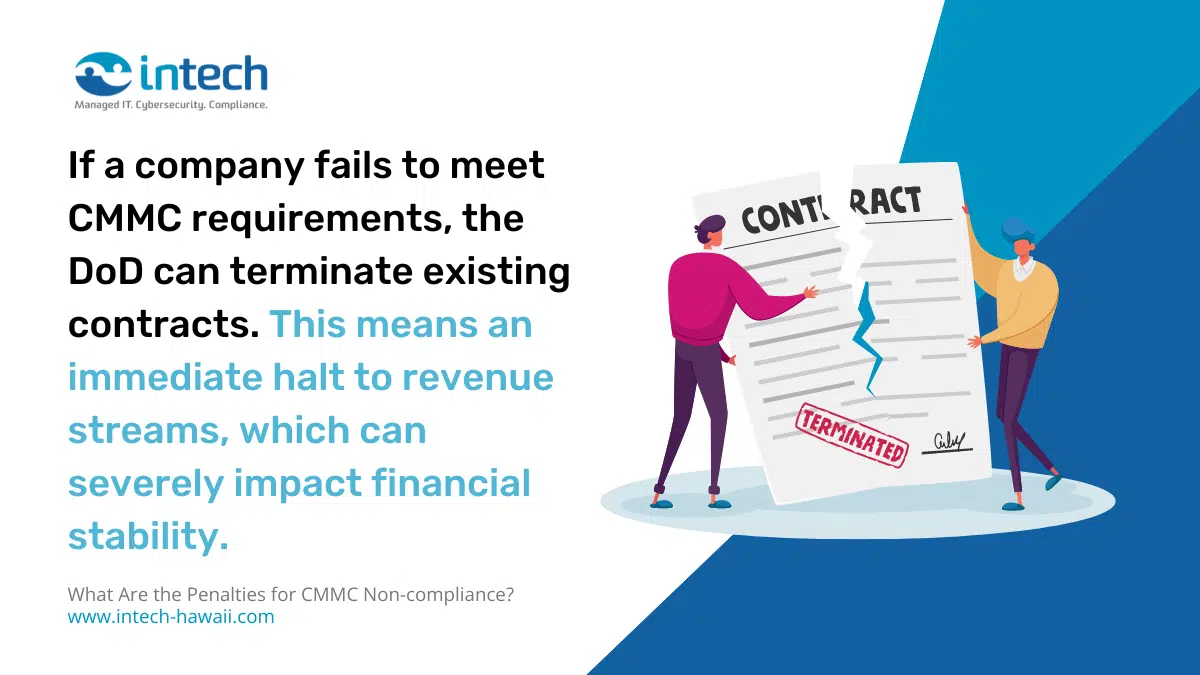
If a company fails to meet CMMC requirements, the DoD can terminate existing contracts. This means an immediate halt to revenue streams, which can severely impact financial stability. The termination process can also involve returning any advance payments and settling contractual liabilities. This abrupt disruption can lead to significant operational setbacks and workforce reductions.
Financial Implications
The loss of contracts translates to significant financial losses, including the sunk costs of project initiation and planning. Companies may also face additional costs related to staff layoffs, equipment decommissioning, and other operational wind-down activities. The financial strain from losing contracts can limit a company’s ability to invest in growth and innovation.
4. Loss of Future Contracts
Ineligibility for Future Contracts
Non-compliant companies will be ineligible to bid on future DoD contracts. This restriction can severely limit business growth opportunities and market presence. The inability to secure future contracts can stifle innovation and market competitiveness. It also diminishes a company’s potential to form strategic partnerships and alliances within the industry.
Long-term Financial Impact
Being barred from future contracts results in long-term financial setbacks, affecting the company’s profitability and sustainability. The loss of predictable revenue streams can hinder strategic investments and expansion plans. Sustained non-compliance can lead to a decline in market share and overall business viability.
5. Damage to Reputation
Trust Issues
Non-compliance can damage a company’s reputation, leading to a loss of trust among clients and partners. A tarnished reputation can be challenging to rebuild and can hinder future business opportunities. Trust is a critical asset in the defense sector, where reliability and security are paramount. Rebuilding a damaged reputation can be a long and costly process.
Loss of Business Opportunities
A poor reputation can result in missed business opportunities as potential clients may choose to work with compliant competitors. The perception of non-compliance can lead to a loss of competitive advantage and market share. Negative publicity and word-of-mouth can further exacerbate the decline in business prospects.
6. Increased Scrutiny and Audits
More Frequent Audits
Non-compliance can lead to increased scrutiny and more frequent audits by regulatory bodies. This can be disruptive and costly for businesses. Frequent audits can divert resources away from core business activities, impacting productivity and efficiency. The continuous need for audits can strain administrative and operational capacities.
Cost of Compliance Audits
The costs associated with more frequent compliance audits can be substantial, adding to the financial burden of non-compliance. These costs include hiring external auditors, implementing corrective actions, and ongoing monitoring efforts. The financial impact of repeated audits can erode profit margins and hinder financial stability.

7. Legal Consequences
Breach of Contract
Non-compliance can be considered a breach of contract, leading to legal actions by the DoD. This can result in costly legal battles and further financial penalties. Legal disputes can also lead to extended periods of uncertainty and business disruption. The legal repercussions can tarnish a company’s industry reputation and credibility.
Potential Lawsuits
In addition to breach of contract, companies may face lawsuits from clients or partners affected by non-compliance, further compounding legal and financial troubles. Litigation can result in settlements, damages, and long-term reputational harm. The costs of legal defense and settlements can be overwhelming and damaging to the company’s financial health.
8. Impact on Business Operations
Disruption of Operations
The consequences of non-compliance can disrupt business operations, causing delays and affecting productivity. This disruption can have a ripple effect on overall business performance. Operational inefficiencies can erode customer satisfaction and market position. Prolonged disruptions can lead to a loss of key personnel and expertise.
Increased Operational Costs
Non-compliance can lead to increased operational costs, including the expenses related to resolving compliance issues and mitigating damages. These costs can encompass hiring compliance experts, upgrading IT infrastructure, and training staff. The cumulative effect of these additional expenses can strain financial resources and operational budgets.
9. Financial Penalties
Breakdown of Possible Fines
The financial penalties for non-compliance can vary, but they are often substantial, ranging from $10,000 to $1,000,000 per violation. Companies can face fines based on the severity of the non-compliance and the potential impact on national security. Penalties are designed to deter non-compliance and reinforce the importance of cybersecurity. The financial strain from fines can significantly impact business continuity and investment capabilities.
Mitigating the Risks of Non-Compliance
Steps to Ensure Compliance
To avoid penalties, companies should take proactive steps to ensure compliance. This includes conducting regular self-assessments, staying updated with CMMC requirements, and implementing necessary cybersecurity measures.
Importance of Regular Audits
Regular audits are crucial in maintaining compliance. These audits help identify potential weaknesses and allow companies to address issues before they become significant problems.
Ensure Your Compliance Today
At Intech Hawaii, we understand the complexities and critical importance of achieving and maintaining CMMC compliance. Don’t let non-compliance jeopardize your contracts and reputation. Our team of IT support experts is here to help you navigate the certification process, secure your sensitive information, and safeguard your business from the severe penalties associated with CMMC non-compliance.
Take action now! Contact Intech Hawaii to schedule a consultation and ensure your business remains compliant and competitive.
