
Small and medium businesses (SMBs) drive many economies, but they face growing cybersecurity threats that often go unnoticed. Unlike larger companies, SMBs usually lack the resources and expertise to implement strong security measures, making them easy targets for sophisticated cyberattacks. Many people don’t fully understand the unique risks SMBs face or how prepared they are to handle these challenges. To address this gap, Microsoft teamed up with Bredin, a top SMB research firm, to survey businesses with 25 to 299 employees. Their findings reveal the latest cybersecurity trends and practical tips to help SMBs protect themselves. Companies like Intech Hawaii play a crucial role in supporting SMBs by providing customized IT and security solutions that strengthen their defenses. As cyber threats grow more complex, partnering with trusted providers and staying informed will help SMBs stay secure and succeed.
One in Three SMBs Have Been Victims of a Cyberattack
Cyberattacks are on the rise, and SMBs are feeling the impact. Research shows that 31% of SMBs have fallen victim to attacks like ransomware, phishing, or data breaches. Despite the unnerving number of growing threats, many SMBs still believe dangerous misconceptions that leave them vulnerable. Some of these organizations assume they’re too small for hackers to target, while others think meeting compliance standards automatically makes them secure. However, the truth is that cybercriminals go after businesses of all sizes, and failing to take cybersecurity seriously can lead to serious consequences.
How Can SMBs Strengthen Their Cybersecurity?
To help SMBs build a strong cybersecurity foundation, Microsoft partnered with the Cybersecurity and Infrastructure Security Agency (CISA) and the National Cybersecurity Alliance (NCA) to outline four simple but effective best practices:
- Implement strong passwords and consider a password manager.
- Activate multifactor authentication.
- Learn to recognize and report phishing.
- Be vigilant by ensuring all software is updated.
By following these steps, SMBs can significantly reduce their risk and stay ahead of cyber threats.
Cyberattacks Cost SMBs Between $250,000 and $7 Million
A cyberattack can hit an SMB hard, often costing more than $250,000—and in some cases, as much as $7 million. The financial impact goes beyond just fixing the problem. Businesses must cover investigation and recovery costs, pay fines for data breaches, and deal with the long-term fallout. Losing customer trust can damage a company’s reputation, making it harder to attract new business. Recovery time varies widely—some SMBs bounce back in a day, while others struggle for weeks or even months. Many businesses believe they can withstand a cyberattack, but they often underestimate how long it takes to restore operations and fully recover.
How Can SMBs Protect Themselves?
A cybersecurity risk assessment can help SMBs identify security gaps and take steps to fix them before an attack happens. These assessments uncover vulnerabilities, ensure compliance with regulations, and establish incident response plans. Proactive planning for cyber threats can reduce the financial, reputational, and operational damage a business might face. Many organizations offer self-service assessments, but working with a security specialist or service provider can provide deeper expertise and guidance when needed.
81% of SMBs Believe AI Increases the Need for Stronger Security
As AI technology rapidly advances and becomes easier to use, SMBs face new security challenges, especially when employees use AI tools without proper safeguards. Without the right protections in place, sensitive company data could end up in the wrong hands, whether through accidental leaks or malicious cyberattacks. Many SMBs recognize this growing risk, with 81% acknowledging that AI increases the need for stronger security controls. The good news is that businesses are taking action, more than half of SMBs that aren’t currently using AI security tools plan to implement them within the next six months to strengthen their defenses.
How Can SMBs Protect Their Data?
Strong data security and governance are essential for safely adopting AI. Businesses can reduce risks by labeling and encrypting sensitive information, ensuring restricted data doesn’t get exposed through AI prompts. Additionally, a well-structured data governance strategy helps SMBs manage, organize, and secure their data effectively, preventing unauthorized access and maintaining compliance with security regulations. Investing in AI security tools, educating employees on safe AI usage, and implementing clear policies around data sharing can further protect businesses from potential threats. By taking these proactive steps, SMBs can embrace AI’s benefits while keeping their critical information safe and secure.
94% of SMBs See Cybersecurity as Essential to Their Business
Cybersecurity has become a top priority for SMBs, with 94% recognizing it as critical to their operations. In the past, many businesses struggled to prioritize security due to limited resources and in-house expertise. However, the rise in cyberthreats and increasingly sophisticated attacks have made it impossible to ignore. SMBs now face major risks, from employees handling work data on personal devices to growing threats like ransomware and phishing scams. As cybercriminals continue to target smaller businesses, protecting sensitive information has never been more important.
How should SMBs tackle this?
One of the most effective ways for SMBs to strengthen their cybersecurity is by partnering with experts like Intech Hawaii. Our ARMOR Cybersecurity services provide 24/7 threat detection, rapid incident response, and access to advanced security tools. With a dedicated security team managing risks, SMBs can focus on growing their business while staying protected from evolving cyber threats.
Third-party assistance is more common than you’d think
Most small businesses don’t manage cybersecurity by themselves due to limited budgets and technical knowledge. As a result of this, SMBs will usually seek help from outside experts. Fewer than 30% handle security internally, relying instead on specialized consultants or third-party providers to keep their systems safe. These professionals are instrumental in finding, implementing, and maintaining protections that shield businesses from modern threats.
What Steps Can Small Businesses Take?
Partnering with Managed Service Providers (MSPs) like Intech Hawaii is a common strategy for enhancing security. MSPs offer a comprehensive approach, covering everything from identifying the best defense tools to setting up and maintaining systems. They also address incidents directly, allowing businesses to stay focused on daily operations.
This partnership approach not only bolsters defenses but also ensures small businesses can operate confidently without worrying about complex security challenges.
A Majority of SMBs Have Plans to Expand Cybersecurity Budgets to Focus on Data Protection
As cybersecurity becomes a top priority for business owners, 80% of small businesses are preparing to increase their spending on security. As technology continues to advance, protecting sensitive customer data and avoiding financial fallout is more important than ever before. It isn’t surprising that data protection leads the list of priorities, with 65% of businesses planning to focus their budgets here. Other key areas of investment include stronger firewalls, better defenses against phishing and ransomware, device security, and improved identity and access management.
How Can SMBs Boost Their Security?
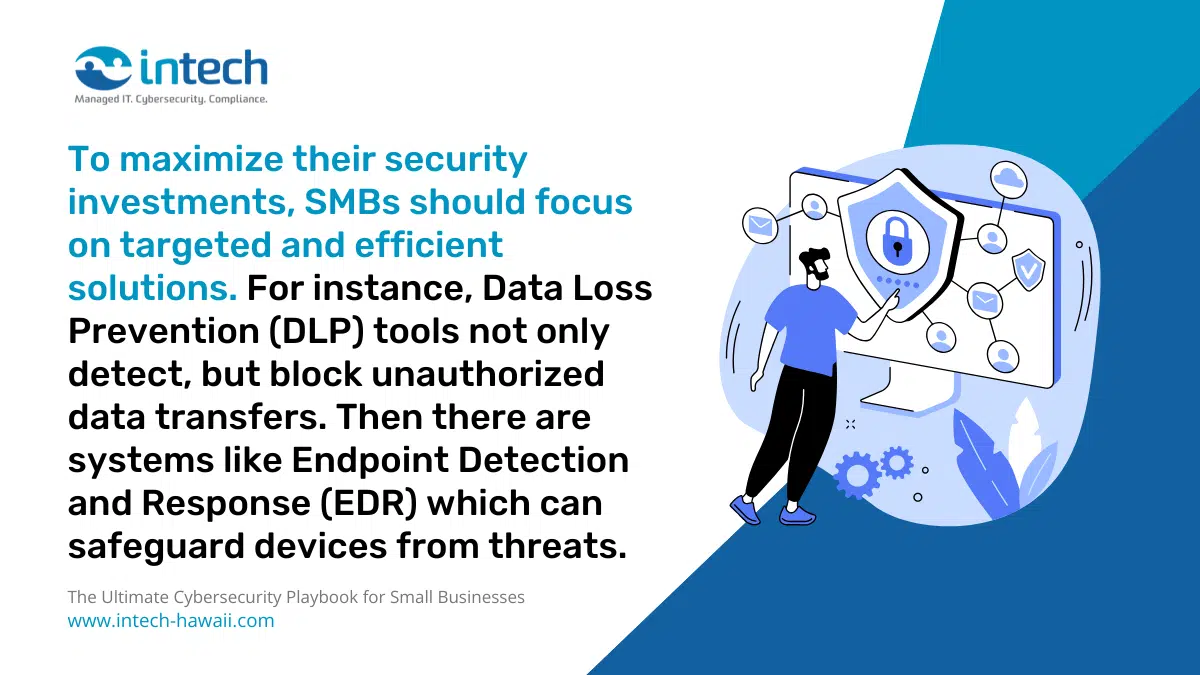
To maximize their security investments, SMBs should focus on targeted and efficient solutions. For instance, Data Loss Prevention (DLP) tools not only detect, but block unauthorized data transfers. Then there are systems like Endpoint Detection and Response (EDR) which can safeguard devices from threats. Identity and Access Management (IAM) solutions ensure only the right people have access to sensitive information. By prioritizing these measures, small businesses can build a more secure foundation and stay ahead of cyber threats.
Secure Data Access Remains a Key Challenge for Remote Workers
Hybrid and remote work has created new security challenges for small businesses, especially as it becomes a long-term norm. With many SMBs employing remote or hybrid workers, providing secure access to company data has become a top priority and necessity. Businesses are also becoming more worried about the risks of data loss on personal devices. To protect sensitive information in this ever-changing environment, it’s essential to adopt device security and management solutions that allow employees to work securely from any location.
How Can Small Businesses Address This?
SMBs can take simple but effective steps to secure remote work. These include keeping devices and software up to date, downloading mobile apps only from trusted sources, and avoiding sharing credentials via email or text. If sharing passwords is necessary, it’s best done over a real-time phone call to minimize risks. These practices help safeguard both company data and devices, ensuring secure operations in a hybrid work model.
Stay Ahead of Cyber Threats and Protect Your Business
Cyber threats continue to pose a significant risk to businesses of all sizes, yet small and medium-sized businesses are especially vulnerable. As these threats evolve and become harder to combat, it is important for SMBs to make proactive cybersecurity decisions. At Intech Hawaii, we can help you and your business make these complex decisions. We specialize in providing tailored cybersecurity solutions, including 24/7 threat detection and advanced data protection tools. Our team is passionate about helping you secure your business, stay compliant, and mitigate risks effectively.
Let’s take a step towards a more secure future together! Contact us today for a consultation and let us help you build a robust defense against evolving cyber threats.
