

In 2025, Hawaii presents unique challenges for businesses striving to protect themselves from cyber threats. Credential compromise, phishing attacks, and ransomware continue to be primary concerns, impacting companies of all sizes. To stay ahead, understanding these cybersecurity threats and adopting proactive measures is crucial.
Hawaii’s businesses also face evolving risks from AI-powered threats and cloud security vulnerabilities. Cyber attackers are increasingly using advanced techniques that exploit these technologies, making it essential for organizations to bolster their defenses. Supply chain risks further complicate the cybersecurity landscape, requiring businesses to remain vigilant and prepare for potential breaches.
Regulatory compliance challenges add another layer of complexity for Hawaii businesses in 2025. Companies must navigate changing regulations to avoid penalties and safeguard their reputations. By prioritizing cybersecurity, organizations can protect their assets and maintain trust with customers and partners.
Evolving Cybersecurity Threats
Businesses in Hawaii in 2025 face complex cybersecurity challenges driven by sophisticated technology and tactics. Key threats include malware that demands payments, attempts to manipulate people, weak points in supply chains, consistent covert attacks, and potential issues with internet-based services.
Ransomware and Extortion Campaigns
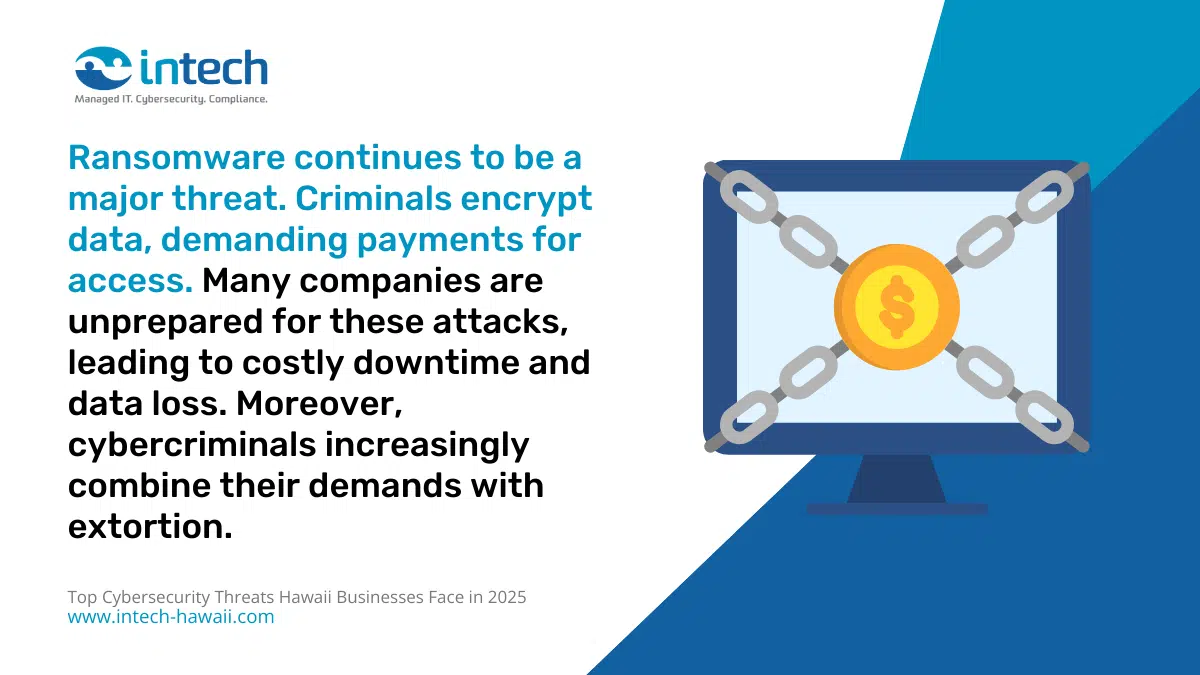
Ransomware continues to be a major threat. Criminals encrypt data, demanding payments for access. Many companies are unprepared for these attacks, leading to costly downtime and data loss. Moreover, cybercriminals increasingly combine their demands with extortion. They threaten to leak sensitive data unless they receive payment. Businesses must implement strong backup solutions and incident response plans. Critical to defense is comprehensive employee training to recognize potential threats early.
Social Engineering Attacks
Social engineering exploits human psychology to gain confidential information. Attackers often pose as trusted contacts, tricking employees into revealing passwords or sensitive data. Phishing emails and phone calls are common methods. These attacks target people rather than technology, making them hard to detect. Businesses need robust training programs to increase awareness of these tactics. Cross-verification processes can also help ensure information requests are legitimate.
Supply Chain Vulnerabilities
Supply chain vulnerabilities offer cybercriminals indirect paths into a business’s systems. Many third-party vendors interact with business networks, creating potential security gaps. As noted by experts, monitoring these channels is crucial. Companies should assess the cybersecurity practices of their suppliers. Implementing strict access controls and regularly updating security protocols can minimize risks.
Advanced Persistent Threats (APTs)
APTs are stealthy, relentless attacks aiming to gain long-term access to sensitive data. Unlike other threats, APTs focus on remaining undetected for extended periods while gathering information. They often target industries with valuable intellectual property. Strong perimeter defenses are critical, as are systems to detect unusual network activity. Security teams need to continuously adapt to evolving APT tactics, ensuring their defensive measures remain effective.
Cloud Computing Risks
As businesses increasingly rely on cloud computing, they face unique challenges. Cloud environments can expose data through misconfigurations. Data breaches in the cloud are often due to errors in setting access controls. To mitigate risks, companies must conduct thorough audits of their cloud environments. Using tools like multi-factor authentication and encryption helps protect sensitive data. Businesses should collaborate closely with cloud providers to maintain robust security practices.
Cybersecurity Mitigation and Response
Effective cybersecurity strategies are crucial for businesses in Hawaii to tackle cyber threats. Key areas include incident response planning, leveraging cyber insurance, investing in employee training, and adopting zero trust architecture.
Incident Response Planning
Developing a sound incident response plan helps businesses quickly address and mitigate cyber incidents. This plan should include procedures for identifying, containing, and recovering from attacks. Teams need to be assigned specific roles in such scenarios.
Incident response plans should also detail communication strategies both internally and externally. Updates and drills ensure readiness and quick response when incidents occur, minimizing damage and downtime. Companies can significantly reduce the impact of cyber threats by proactively planning.
Cyber Insurance as a Mitigation Strategy
Cyber insurance is an essential tool for businesses seeking financial protection against cyber incidents. It covers costs related to data breaches, ransomware attacks, and more. Policies vary, so businesses must review and select coverage matching their specific risks.
Cyber insurance can alleviate the financial burden tied to security incidents. Insurers may also provide access to threat intelligence and response services, enhancing overall security posture. Regularly reassessing coverage ensures alignment with evolving threats and organizational needs.
Investment in Employee Training

Employees are often the first line of defense against cyber threats. Comprehensive security training programs that focus on recognizing phishing attempts, secure data handling, and password management are critical. Regular updates keep employees informed about the latest threats and best practices.
Interactive workshops, simulations, and routine assessments can improve awareness and response skills. A well-informed workforce significantly enhances a company’s defense mechanisms, reducing the likelihood of successful attacks.
Adoption of Zero Trust Architecture
Zero trust architecture is an approach that operates under the principle of always verifying access requests, regardless of their origin within or outside the network. It involves strict access controls and continuous verification.
Implementing zero trust requires organizations to segment networks, enforce least privileged access, and regularly audit access logs. This architecture limits the movement of potential attackers within a network, providing a robust layer of protection. Adopting zero trust can fortify a business’s cybersecurity framework, ensuring only authorized users gain access to sensitive data.
Protect Your Business from Evolving Cybersecurity Threats
Cybersecurity threats are becoming more sophisticated, putting Hawaii businesses at greater risk. Don’t wait for an attack to disrupt your operations—take action now. At Intech Hawaii, we provide proactive cybersecurity solutions, including advanced threat monitoring, employee training, and strategic defenses tailored to your business needs. Our IT experts help you stay compliant, secure your data, and prevent costly breaches. Protect your business before it’s too late. Contact us today for a consultation and strengthen your cybersecurity defenses.
