
Cybersecurity risk management is the process of identifying, prioritizing, and handling threats to an organization’s digital systems and information. With cyber threats always changing, every business needs a strategy to manage risks and protect itself from attacks. This involves identifying weak spots, assessing their severity, and developing strategies to address them.
Effective cybersecurity risk management helps organizations decide what to protect and how much to invest in security. By focusing on the most important risks, companies can use their resources wisely and keep important data safe.
Core Principles of Cybersecurity Risk Management
Cybersecurity risk management protects information systems by finding and mitigating possible risks. It uses different steps and best practices to keep data safe and business operations running smoothly.
Definition and Scope
Cybersecurity risk management means finding, measuring, and handling risks to an organization’s computer systems and sensitive data. This process covers threats like hacking, malware, data theft, and accidental leaks. It looks at both technical problems and human mistakes that could let cyber threats harm a business.
The scope includes all digital assets, such as networks, devices, and cloud services. Risk management methods must be updated as technology changes. New threats can show up anytime, so companies need to review their risks often to stay protected.
A clear definition and up-to-date scope help organizations deal with risks in a focused way. It also helps them follow regulations and meet industry standards, making it a key part of modern IT practices. Well-defined compliance practices support this effort by helping organizations align security controls with regulatory requirements and maintain consistency as standards evolve.
Key Components
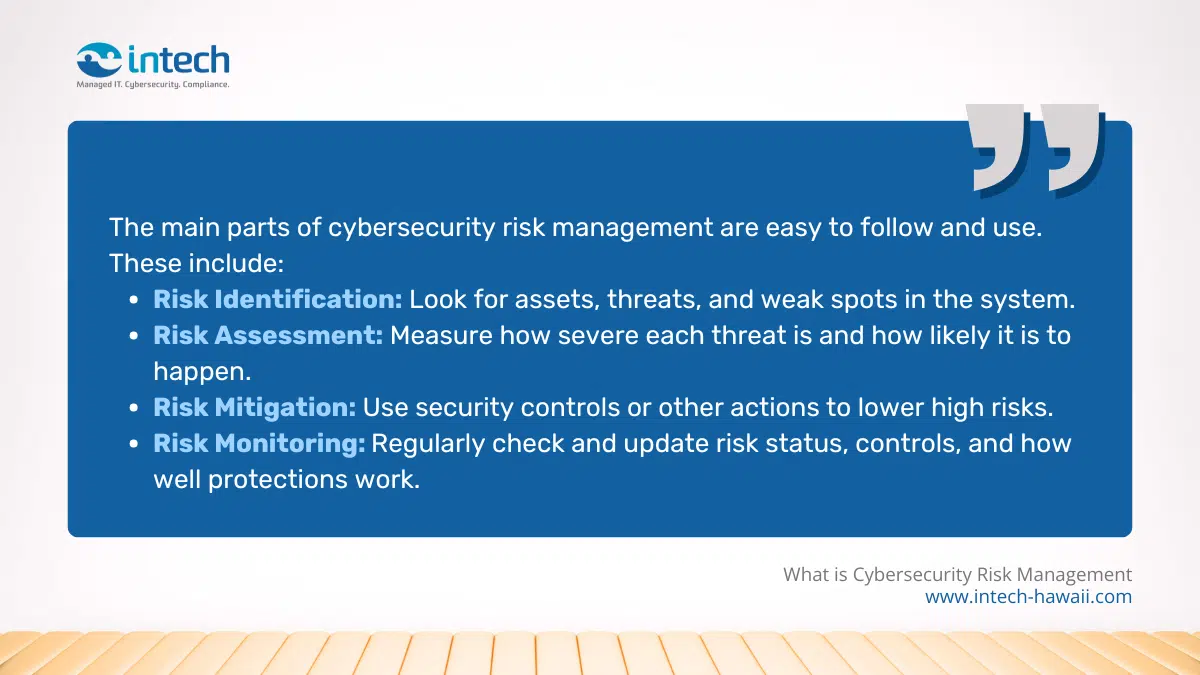
The main parts of cybersecurity risk management are easy to follow and use. These include:
- Risk Identification: Look for assets, threats, and weak spots in the system.
- Risk Assessment: Measure how severe each threat is and how likely it is to happen.
- Risk Mitigation: Use security controls or other actions to lower high risks.
- Risk Monitoring: Regularly check and update risk status, controls, and how well protections work.
Many organizations use a mix of policies, technology tools, and staff training to manage risks. Writing clear procedures and using strong passwords, firewalls, and up-to-date software all play a role. Regular system checks and employee awareness also help.
Importance in Modern Organizations
Cybersecurity risk management is essential for companies of all sizes because every business relies on digital systems. Hacking and data breaches can cause lost money, harm to reputation, and even legal trouble. By using risk management, companies can lower the chance of cyber incidents and respond better if a problem happens.
Industries such as healthcare and finance face strict data rules. Effective cyber risk strategies help these groups avoid penalties and keep trust with customers.
Organizations that focus on risk management can also adapt faster to new technologies or threats.
Cybersecurity Risk Management Process
Cybersecurity risk management is a step-by-step approach to protecting digital assets from threats. This process uses clear methods to identify risks, evaluate their impact, address weak spots, and keep track of new or changing dangers.
Risk Identification
Risk identification is the starting point of any cybersecurity risk management plan. It involves making a list of all assets, such as computers, network devices, and sensitive data. The goal is to figure out what needs to be protected.
Companies often use asset inventories, network maps, and interviews with key staff to spot assets at risk. They may look for areas where their defenses could be weak, like outdated software or gaps in firewall coverage. This step also involves understanding who might attack them, including hackers, insiders, or accidental threats. Strong cybersecurity practices help bring structure to this stage by identifying vulnerabilities earlier and providing clearer insight into where protections need to be strengthened.
By creating a detailed record of assets and possible threats, organizations gain a clear understanding of what could be compromised. Updating this inventory regularly is important because assets and threats can change over time. Risk identification serves as the foundation for every other action in the process.
Risk Assessment
Risk assessment follows identification and looks at how likely each risk is and how much damage it could cause. This is where the organization thinks about both the chance of a problem and what happens if it does occur.
Many businesses use a risk matrix, a simple table that lists risks and measures them based on two things: likelihood and impact. This helps them rank the risks from “high” to “low” for easy comparison. For example, a cyberattack on customer data might have a high impact and is likely to happen, so it ranks as a top concern.
Companies also consider how important an asset is to their work and how vulnerable it is to certain threats. Methods like interviews, security tests, penetration testing, and reviewing past incidents help make these judgments. This careful look at risks allows leaders to focus their resources on what matters most.
Mitigation Strategies
Mitigation strategies are steps organizations take to lower the chances or effects of the risks found in earlier steps. These actions can be a mix of technical fixes, changes to processes, or staff training.
Common examples of mitigation include installing antivirus software, using firewalls, updating all systems regularly, and limiting who can view sensitive data. Employees might also get training to recognize phishing scams or avoid risky behaviors. Some risks may be shifted to third parties, like by buying cyber insurance or working with vendors that have higher security standards.
Strategies are chosen based on the cost and benefit of each action. Not all risks can be removed, but most can be made less dangerous. Maintaining a list of chosen controls helps make sure that each step gets completed.
Continuous Monitoring

Risks change as technology and threats evolve, so ongoing tracking is necessary. Continuous monitoring means watching both systems and the environment for new threats or weaknesses.
Teams may use automated tools to scan networks and devices for unusual activity. Regular audits, vulnerability scans, and reviewing logs help spot new dangers quickly. For many organizations, working with an experienced managed service provider adds an extra layer of oversight by continuously monitoring systems, addressing alerts, and helping ensure issues don’t go unnoticed. It is also important to keep up with news about new types of cyberattacks or patches for software.
Continuous monitoring helps organizations respond faster to incidents. It also allows them to adjust their risk management process as needed. This step is key to making sure that defenses stay strong as risks shift over time.
Strengthen Your Cybersecurity with Proven Risk Management
Stay ahead of evolving threats with expert-driven strategies.
Intech Hawaii provides end-to-end cybersecurity risk management solutions—helping you identify vulnerabilities, reduce risks, and ensure business continuity. From assessment to continuous monitoring, we tailor our services to protect what matters most.
Contact us today to secure your organization with confidence.
